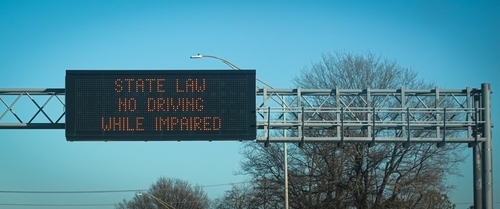
Official statistics show that there are tens of thousands of DWI arrests in Minnesota each year.
If you’ve ever driven late at night or during a holiday weekend in Minnesota, you may have wondered whether you’re more likely to come across a DWI checkpoint at such times. Understanding how common DWI checkpoints are in Minnesota, and what your rights are when you encounter one, can help you ensure your rights are upheld.
How Often Do DWI Checkpoints Happen in Minnesota?
Traditional DWI checkpoints are not used in Minnesota. This is because such checkpoints are generally deemed to be a violation of your Fourth Amendment rights (this is the Constitutional provision that protects you from unreasonable search and seizure).
The Minnesota Supreme Court ruled in Ascher v. Commissioner of Public Safety (1994) that random, suspicion less stops contravene the Constitution. Because of that decision, you generally won’t see the same kind of arbitrary checkpoints that are common in other states.
Instead, Minnesota law enforcement relies heavily on:
- Saturation patrols: Increased numbers of officers actively looking for signs of impaired driving during high-risk periods.
- Targeted enforcement campaigns: Focused patrols in areas with higher rates of DWI offending.
- Traffic stops based on observed behavior: Stops based on observed erratic behavior on the road (such as swerving, excessive speed, or reckless maneuvering).
When Enforcement Is Most Common
Even though you won’t typically encounter checkpoints, DWI enforcement ramps up significantly during certain periods:
- Holiday weekends: Stops and arrests tend to be more common on Memorial Day, Independence Day, Labor Day, Thanksgiving, and New Year’s.
- Weekends: There are more stops on Friday and Saturday nights, on average.
- Major events: large sporting events, festivals, and concerts often trigger heightened enforcement.
Extra DWI enforcement campaigns also occur periodically, sometimes lasting several weeks. Over the holiday season in 2025, police from 296 Minnesota law enforcement agencies collectively made 2,170 DWI arrests during one such campaign.
What To Do If You’re Stopped For Suspected DWI
So, while you shouldn’t encounter routine checkpoints on Minnesota roads, you still need to be wary of DWI stops in other circumstances. Knowing how to react when you’re pulled over can help you to protect your rights.
Stay Calm and Pull Over Safely
If you see flashing lights, signal and pull over as soon as it’s safe. Avoid sudden movements. Your behavior in those first moments matters more than you might think.
Provide Required Information
You are required to provide:
- Your driver’s license.
- Vehicle registration.
- Proof of insurance.
Keep your movements slow and deliberate when reaching for these items.
Be Careful with What You Say
Once you’ve identified yourself and provided the required documentation, you have the right to remain silent. If an officer asks whether you’ve been drinking, you are not required to answer that question.
Understand Testing Requirements
Officers may ask you to perform field sobriety tests; these can involve the walk-and-turn, the horizontal gaze nystagmus, and the one-leg stand.
Field sobriety tests are technically voluntary; you can legally refuse to complete them. However, Minnesota’s implied consent law applies to chemical testing (breath, blood, or urine tests). Refusing a chemical test can carry separate legal consequences.
Know That Every Stop Can Be Challenged
Minnesota’s rules in this area mean that every DWI stop should be subject to scrutiny to ensure that it was compliant with the law. If your attorney can prove that a police officer tested you unlawfully, the court may decide to throw out your case.
Your attorney will check:
- Whether the officer had a valid reason to stop you.
- How the investigation was conducted.
- Whether your rights were respected.
Talk To A Minnesota DWI Lawyer If You’ve Been Charged
If you were stopped and charged, your next steps matter. The details of your stop, the officer’s actions, and the evidence gathered can all impact your case.
Working with an experienced attorney means you’ll have someone who can:
- Review whether your stop was lawful.
- Challenge questionable evidence.
- Guide you through Minnesota’s DWI process.
If you’re dealing with a DWI charge, don’t try to handle it alone. Contact us today to discuss your situation and protect your rights.